
Citizenship test guide
History of immigration to the United States: a timeline of laws and notable immigrants
Becoming a citizen is a step in a long story. Learn who lived here first, how Africans were brought by force and helped build the country, where immigrants came from and when, how the laws changed, and meet notable people from many countries and fields.
Start practicing →Who was here, who was brought, and who chose to come
The United States has more than one beginning. Native peoples had lived here for thousands of years. Millions of Africans were brought here by force and enslaved. And many millions of people chose to leave their homes and come. This page tells all three stories, with the laws that changed who could come or become a citizen, and the people who lived through them. People who study for the US citizenship test learn about the Oath of Allegiance and the rights of citizens. This page adds the history behind those ideas.
The civics test asks about all of this: who lived in America before the Europeans arrived, what group of people was taken and sold as slaves, and what war ended slavery. Each story is told below with its sources.
- Before 1600The first peoples
- 1619 to 1865Africans brought by force
- 1600s to 1820Colonies and the early republic
- 1820 to 1880Irish, German and other northern European arrivals
- 1880 to 1924The great wave from southern and eastern Europe
- 1924 to 1965The quota years, war and refugees
- 1965 to todayA new law and new places of origin
Before 1600
Before the "New World": a land already full of people
Europeans called the Americas the "New World," but the land was not new and it was not empty. Native peoples had lived here for many thousands of years. No one knows exactly how many people there were, because few written records exist. Scholars' estimates for what is now the United States and Canada range from about 1 million to more than 10 million people.
They spoke hundreds of languages in many language families. Nations had their own governments, laws, trade, art, music and ways of teaching children. Many grew crops such as corn, beans and squash. Others fished, hunted bison or gathered wild rice. Trade routes carried copper, shells, stone and food across the continent.
Some of the largest towns north of Mexico were built long before Columbus. Cahokia, near today's St. Louis, had earth mounds, open plazas and a circle of wooden posts used as a sun calendar. At its height, from about 1050 to 1150, the National Park Service estimates 10,000 to 20,000 people lived in Cahokia itself, and perhaps more in nearby towns. In Chaco Canyon in New Mexico, Ancestral Pueblo builders made stone buildings with hundreds of rooms, joined to other towns by roads.
Many settlers called Native people "savages." That word was a prejudice, not a fact. Native nations had cultures and histories as old and as rich as those of the Europeans who arrived.
After 1492 the lives of Native peoples changed greatly. Diseases from Europe, such as smallpox, spread through communities that had never met them. Wars, treaties, the loss of land and forced moves, such as the removals of the 1830s, also reduced Native populations and homelands. In 1924 the Indian Citizenship Act made all Native Americans born in the United States citizens.
Today 575 tribes are recognized by the federal government, and many Native nations run their own governments, schools and courts. The US citizenship test asks who lived in America before the Europeans arrived, and for the name of one tribe.
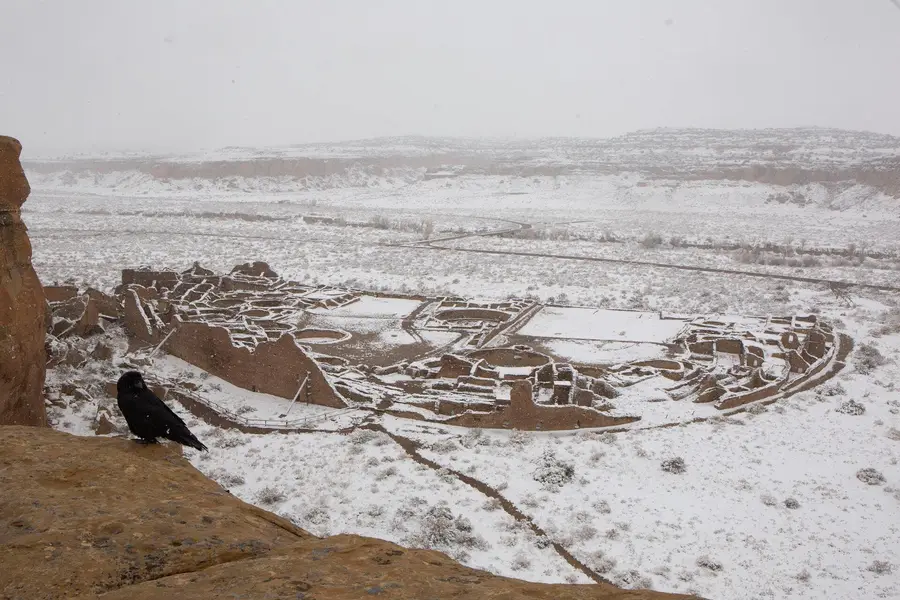
Some of the Native nations
There were and are hundreds of nations. This short list shows how different their homes and ways of life were.
Haudenosaunee (Iroquois)
Present-day New York
A confederacy of five nations, the Mohawk, Oneida, Onondaga, Cayuga and Seneca, joined later by the Tuscarora. They lived in longhouses, and clan mothers chose the leaders.
Cherokee
The southern Appalachian Mountains
Farming towns with a council house in each. The Cherokee are one of the tribes named on the citizenship test list.
Named in a citizenship test answer
Muscogee (Creek), Choctaw and Seminole
The Southeast
Farming towns near rivers. Their ancestors included builders of earth mounds. The Seminole came together later in Florida. The Choctaw and Seminole are named on the test list.
Named in a citizenship test answer
Wampanoag
Coast of present-day Massachusetts and Rhode Island
One of many Algonquian-speaking nations of New England. They farmed, fished and traded, and they met the Plymouth settlers in 1620.
Powhatan
Chesapeake Bay area, Virginia
A group of about 30 nations led by one chief. They met the Jamestown settlers in 1607.
Ojibwe (Chippewa)
The Great Lakes
Wild rice harvesters and birchbark canoe builders. Chippewa is named on the test list.
Named in a citizenship test answer
Lakota (Sioux)
The Great Plains
Bison hunters and traders. The Lakota, Dakota and Nakota are related nations, and Sioux is named on the test list.
Named in a citizenship test answer
Diné (Navajo) and Apache
The Southwest
Diné and Apache peoples are related and speak related languages. The Navajo Nation is today the largest reservation in the United States. Both names are on the test list.
Named in a citizenship test answer
Pueblo peoples (Hopi, Zuni, Taos and others)
New Mexico and Arizona
Farmers of dry land who built stone and adobe towns of several stories. Some of these towns have been lived in for hundreds of years. Pueblo is named on the test list.
Named in a citizenship test answer
Chinook, Haida, Tlingit and others
The Pacific Northwest coast
Salmon fishers who built cedar plank houses and carved totem poles and canoes.
Inuit, Yup'ik and Unangan (Aleut)
Alaska and the Arctic
Sea hunters and fishers with skills for living in a cold climate.
Native Hawaiians
Hawaii
Polynesian voyagers reached the islands more than a thousand years ago. Hawaii was an independent kingdom until the 1890s.
1619 to 1865
1619 to 1865: Africans brought by force
Most Africans did not come to North America by choice. They were captured in Africa, sold, and carried across the Atlantic Ocean on ships to be enslaved. The first known arrival in English-occupied North America was in August 1619, when the ship White Lion brought about twenty people to Point Comfort, Virginia. They came from the kingdom of Ndongo, in what is now Angola. Slavery then lasted in the United States for 246 years.
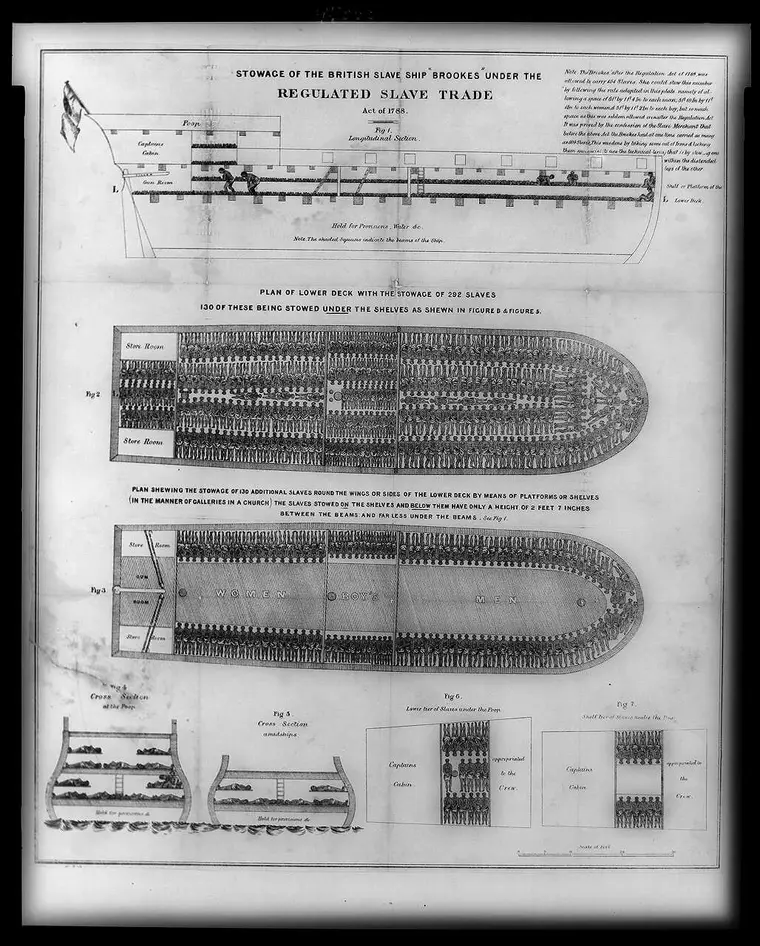
From the 1500s to the 1800s, about 12 million Africans were taken across the Atlantic as human property. About 4.8 million were taken to Brazil and 4.7 million to the Caribbean. At least 388,000 arrived in North America, about 4 percent of the people who survived the crossing.
The crossing is called the Middle Passage, and it lasted about 80 days. Crews packed people together on or below the decks, with no room to sit up or move, and with little fresh air or water. About 15 percent of the people became sick and died. Survivors were separated from their families, their homes and their languages.
The Constitution said Congress could not ban the importation of enslaved people before 1808. Congress passed a law in 1807 that took effect on January 1, 1808, and ended the bringing of people from other countries. It did not end slavery or the buying and selling of people inside the country. Slavery continued for another 57 years.
Enslaved people did much of the work of early America. In South Carolina, planters wanted Africans who knew how to grow rice, and that knowledge, with their labor, helped make the colony rich. Enslaved and hired-out laborers quarried stone, cut lumber and worked as carpenters, bricklayers and plasterers on the White House and the Capitol, and researchers have found the names of more than 200 of them. African knowledge also saved lives: an enslaved man named Onesimus told his enslaver, the Boston minister Cotton Mather, how people in West Africa protected themselves from smallpox, and in 1721 a Boston doctor used the method.
Slavery divided the country. After Abraham Lincoln was elected president in 1860, eleven Southern states left the Union, and the Civil War began in 1861. On January 1, 1863, Lincoln issued the Emancipation Proclamation, which declared that enslaved people in the states fighting against the Union were free. It did not apply to the border states that stayed in the Union or to some areas the Union army already held, and it took Union victory to carry it out. Nearly 180,000 Black men served in the Union army as United States Colored Troops. The war ended in 1865. That year the 13th Amendment, which Congress passed on January 31 and the states ratified on December 6, ended slavery everywhere in the United States.
These people did not choose to come, so many historians call this forced migration and not immigration. Their work and their lives are part of how the country was built. Read the text of the Constitution to see the words about 1808 and the 13th Amendment.
Notable people who were enslaved
Phillis Wheatley
Poet, brought from West Africa
Phillis Wheatley was brought to Boston on a slave ship in 1761, as a child. She learned to read and write in the household of the family who enslaved her, and was freed after her first book was published. Her Poems on Various Subjects, Religious and Moral came out in London in 1773 and was the first book of poetry published by an African American.
Onesimus
Enslaved by the minister Cotton Mather, in Boston
Onesimus was a West African man enslaved by Cotton Mather, a Boston minister. He told Mather about inoculation, a way to protect against smallpox used in West Africa. In the Boston outbreak of 1721, Mather urged a doctor to try it. It was risky and not the modern vaccine, but historians credit it with saving lives.
National Park Service: smallpox, inoculation and the Revolutionary War
Crispus Attucks
Sailor of African and Native American ancestry
Records suggest Attucks escaped slavery about 1750 and worked on whaling ships. On March 5, 1770, British soldiers shot him in the Boston Massacre, and he was the first to fall. Later, abolitionists honored him as a patriot.
Philip Reid
Enslaved foundry worker
Philip Reid worked in the foundry of the sculptor Clark Mills, and he helped cast the bronze Statue of Freedom that stands on top of the United States Capitol dome.
Architect of the Capitol: Philip Reid and the Statue of Freedom
Sojourner Truth
Born enslaved in New York
Sojourner Truth was born Isabella Baumfree in 1797. Her first language was Dutch, because she was enslaved by Dutch settlers in New York. After she gained her freedom she became a famous speaker for the end of slavery and for women's rights.
Frederick Douglass
Born enslaved in Maryland
Frederick Douglass was born into slavery on the Eastern Shore of Maryland in 1818. He escaped and became one of the most important writers and speakers against slavery, and an adviser to leaders in the Civil War.
Harriet Tubman
Born enslaved in Maryland
Harriet Tubman escaped slavery and helped other people escape north on the Underground Railroad. During the Civil War she served the United States Army as a spy, scout, nurse and cook.
- National Park Service: The Middle Passage
- National Park Service: arrival of the first Africans in 1619
- National Archives: the slave trade and the 1807 law
- Smithsonian: British South Carolina
- White House Historical Association: enslaved labor and the Capitol
- Massachusetts Historical Society: variolation and vaccination
- National Park Service: the Emancipation Proclamation
- Library of Congress: Abraham Lincoln and emancipation
- National Archives: 13th Amendment
Period 1: 1600s to 1820
Colonies and the early republic
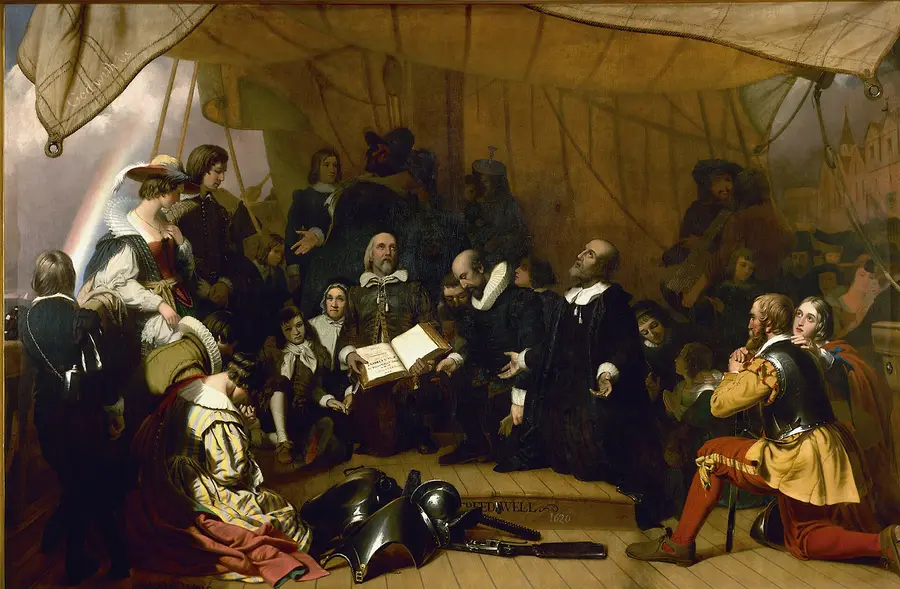
Settlers came from many parts of Europe to the colonies that became the United States. The new country had no national limits on immigration. The first census in 1790 counted about 3.9 million people. The government did not keep national records of arrivals until 1820.
Where many people came from
- England
- Scotland
- Ireland
- Germany
- The Netherlands
- France
- Sweden
How the law changed
- 1790
Naturalization Act of 1790
The first national law on naturalization, the process of becoming a citizen. It said a free white person of good character who had lived in the country for two years could become a citizen. The residence time changed to five years in 1795, to 14 years in 1798 and back to five years in 1802.
National Archives: Major US Laws Relating to Immigration and Naturalization, 1790 to 2005
Notable immigrants who arrived in this period
Anne Hutchinson
From England, came in 1634 · Religion and community
Came to Boston with her family. She led Bible discussions at her home and spoke about her own religious ideas, was sent away from Massachusetts in 1638, and helped start a settlement in what is now Rhode Island.
Alexander Hamilton
From Nevis, in the Caribbean, came in 1772 · Government and finance
Came to New York as a teenager. He became the first Secretary of the Treasury and wrote many of the Federalist Papers, which argued for the Constitution.
Haym Salomon
From Poland, came in 1775 · Banking
A Jewish banker who settled in New York. He helped raise money for the American Revolution.
Albert Gallatin
From Switzerland, came in 1780 · Government
Came as a young man and settled in Pennsylvania. He served in Congress and was Secretary of the Treasury for 13 years under Presidents Jefferson and Madison.
Period 2: 1820 to 1880
Irish, German and other northern European arrivals
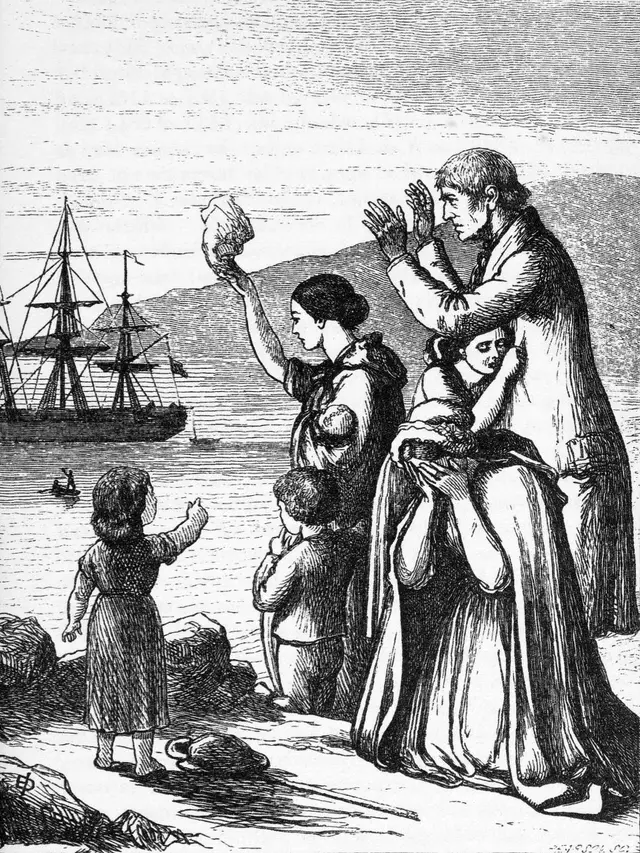
About 10 million people arrived. Many Irish came during the Great Famine of the 1840s, and many Germans came for farmland and after the revolutions of 1848. Chinese workers came to California after 1849 for the Gold Rush and later to build the transcontinental railroad.
Where many people came from
- Ireland
- Germany
- Great Britain
- Scandinavia
- China
How the law changed
- 1868
14th Amendment
Says that all persons born or naturalized in the United States, and under its authority, are citizens. It was adopted after the Civil War.
- 1870
Naturalization Act of 1870
Extended the right to naturalize to people of African descent. Other racial limits on naturalization remained until the 1940s and 1950s.
- 1875
Page Act
Barred bringing people from Asia to work against their will, and barred women brought for immoral purposes. Officials used it mostly against Chinese women. It is often called the first federal law to restrict immigration.
Notable immigrants who arrived in this period
Elizabeth Blackwell
From England, came in 1832 · Medicine
Moved to the United States as a girl. In 1849 she became the first woman in the country to earn a medical degree.
Levi Strauss
From Bavaria, now Germany, came in 1847 · Business
Came to New York and later moved to San Francisco. In 1873 he and a partner received a patent for work pants with metal rivets, the first blue jeans.
Andrew Carnegie
From Scotland, came in 1848 · Business and giving
Came at age 12 and worked in a factory. He built a steel company, then gave away most of his money, including funds for more than 1,600 public libraries in the United States.
Yung Wing
From China, came in 1847 · Education
In 1854 he became the first Chinese graduate of a US university, Yale. He later organized a program that brought Chinese students to study in New England.
Carl Schurz
From Germany, came in 1852 · Government
Left Germany after the 1848 revolutions. He served as a Union general in the Civil War, a US Senator from Missouri and Secretary of the Interior.
Joseph Pulitzer
From Hungary, came in 1864 · Journalism
Arrived as a young man and became a newspaper publisher. The Pulitzer Prizes for journalism, books and music began with money he left for them.
Alexander Graham Bell
From Scotland, came in 1871 · Invention
Moved from Canada to Boston to teach deaf students. He received the patent for the telephone in 1876 and became a US citizen in 1882.
Mary Harris Jones (Mother Jones)
From Ireland · Labor organizing
Born in Cork, Ireland. She traveled the country to help coal miners and other workers organize for better pay and safer jobs.
Period 3: 1880 to 1924
The great wave from southern and eastern Europe
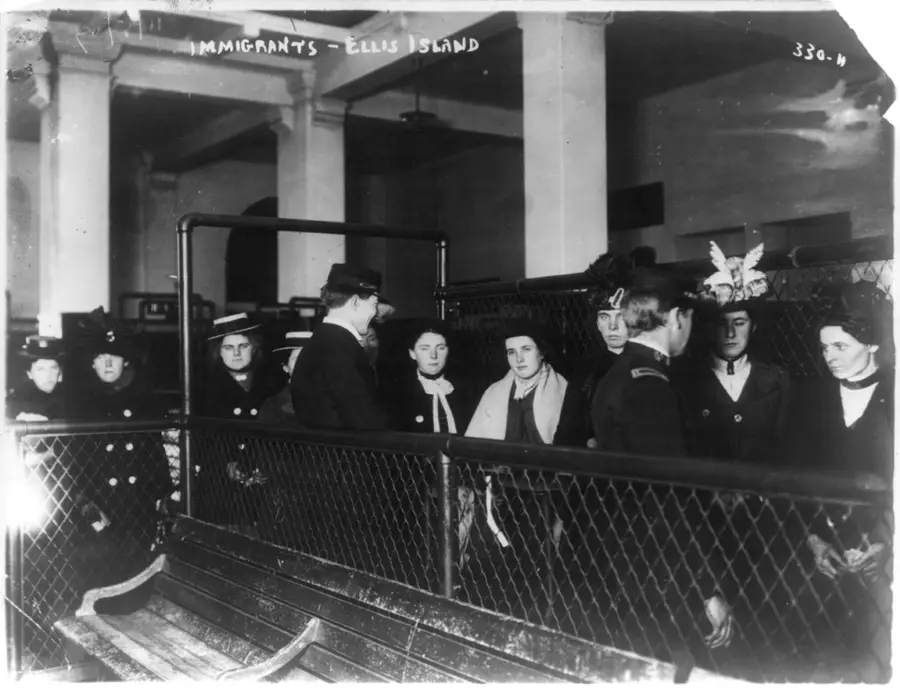
About 23 million people arrived between 1881 and 1920. Many came from Italy, the Russian Empire and Austria-Hungary, and many were Jewish. More than 12 million people were processed at Ellis Island from 1892 to 1954, and Angel Island in San Francisco Bay served arrivals from Asia from 1910 to 1940. At this time about 15 percent of people in the country were born elsewhere.
Where many people came from
- Italy
- Austria-Hungary
- Russian Empire
- Poland
- Greece
- Japan
- Mexico
- Canada
How the law changed
- 1882
Chinese Exclusion Act
Stopped Chinese workers from entering for ten years. It was renewed and made permanent, and it was the first US law to bar a group of immigrants because of their nationality. It was repealed in 1943.
- 1882
Immigration Act of 1882
The first general federal immigration law. It charged each arriving immigrant a head tax of 50 cents and barred people who were convicted criminals or likely to need public support.
- 1891
Federal control of immigration
The federal government took over inspection of arriving immigrants from the states. The Ellis Island station in New York Harbor opened in 1892.
- 1917
Immigration Act of 1917
Required immigrants over age 16 to show they could read in some language, and barred most people from a zone covering much of Asia.
- 1921
Emergency Quota Act
Set the first numbers limit on immigration. Each country could send each year 3 percent of the number of its people who were living in the United States in 1910.
- 1924
Immigration Act of 1924 (Johnson-Reed Act)
Lowered the quota to 2 percent of the people of each nationality living in the United States in 1890, which favored northern and western Europe. It also excluded immigrants from most of Asia. The Border Patrol was created the same year.
Notable immigrants who arrived in this period
Nikola Tesla
From Austrian Empire, now Croatia, came in 1884 · Electrical engineering
Arrived in New York with very little money. His work on alternating current helped bring electricity to homes and businesses.
Frances Xavier Cabrini
From Italy, came in 1889 · Care for others
Came to New York to help Italian immigrants. She started schools, hospitals and orphanages, and in 1946 she became the first US citizen named a saint by the Catholic Church.
Kahlil Gibran
From Lebanon, then part of the Ottoman Empire, came in 1895 · Writing and art
Came to Boston as a boy. His book The Prophet, published in 1923, has been translated into many languages.
Irving Berlin
From Russian Empire, came in 1893 · Music
Came to New York at age five. He wrote about 1,500 songs, including White Christmas and God Bless America.
Gerty Cori
From Prague, then Austria-Hungary, came in 1922 · Medicine
With her husband, she studied how the body uses sugar for energy. In 1947 she became the first woman to win the Nobel Prize in Physiology or Medicine.
Isaac Asimov
From Russia, came in 1923 · Science and writing
Came at age three. He taught biochemistry and wrote or edited more than 500 books, many about science and science fiction.
Period 4: 1924 to 1965
The quota years, war and refugees
The quotas, the Great Depression and World War II kept numbers low. In the 1930s fewer than 600,000 people arrived, the lowest total for a decade since the 1820s. After the war, refugees came from Europe, and later from Hungary and Cuba. From 1942 to 1964 the Bracero Program brought Mexican workers to US farms on short contracts.
Where many people came from
- Germany
- United Kingdom
- Canada
- Mexico
- Italy
- Cuba
- Hungary
How the law changed
- 1943
Magnuson Act
Repealed the Chinese exclusion laws, set a small yearly quota for China and let Chinese immigrants become citizens.
- 1948
Displaced Persons Act
Allowed many people made homeless by World War II to come to the United States. A similar law, the Refugee Relief Act of 1953, followed.
- 1952
Immigration and Nationality Act (McCarran-Walter Act)
Combined earlier laws into one law that is still the base of US immigration law. It ended race as a bar to naturalization and kept the national origins quotas.
Notable immigrants who arrived in this period
Larry Itliong
From Philippines, came in 1929 · Labor organizing
Came to the United States as a teenager and worked in farm fields. In 1965 he helped lead the Delano grape strike, which became a major farmworker movement.
I. M. Pei
From China, came in 1935 · Architecture
Came to study architecture. He designed the East Building of the National Gallery of Art in Washington and the glass pyramid at the Louvre in Paris.
Chien-Shiung Wu
From China, came in 1936 · Physics
Came to study at the University of California, Berkeley. She worked on the Manhattan Project, and her 1956 experiment changed ideas about the laws of physics.
Subrahmanyan Chandrasekhar
From India, came in 1937 · Astrophysics
Joined the University of Chicago in 1937. He studied how stars end their lives and won the Nobel Prize in Physics in 1983.
Hedy Lamarr
From Austria, came in 1937 · Film and invention
A film star who also invented. With a partner, she received a patent in 1942 for a way to switch radio signals, an idea later used in wireless technology.
Enrico Fermi
From Italy, came in 1939 · Physics
Left Italy with his family. In 1942 he led the team at the University of Chicago that built the first nuclear reactor.
Albert Einstein
From Germany, came in 1933 · Physics
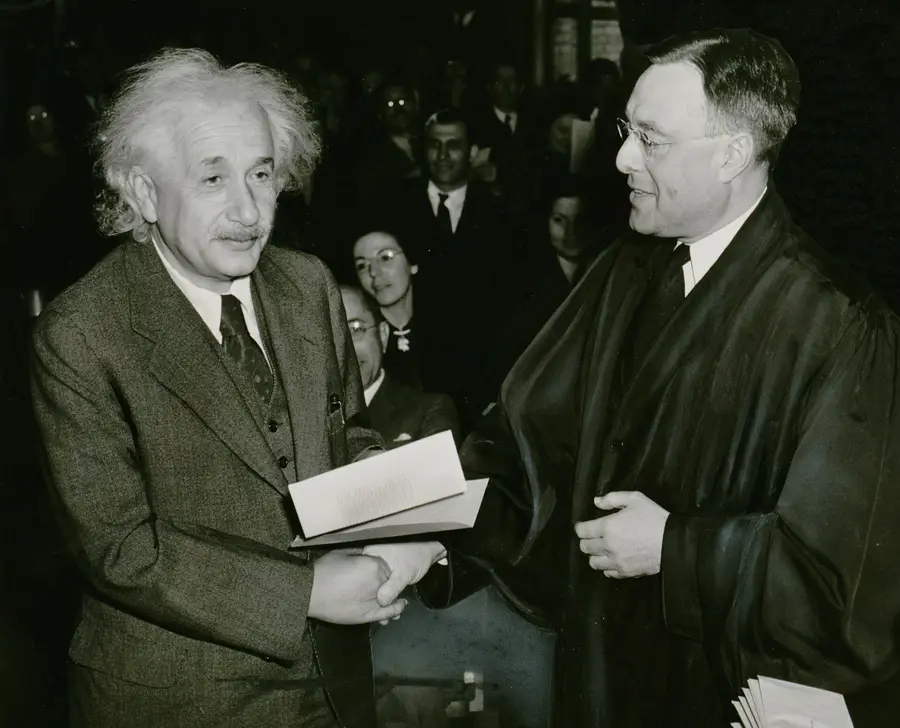
Came to the United States and worked at the Institute for Advanced Study in Princeton. He won the 1921 Nobel Prize in Physics, and he became a US citizen in 1940.
Maria Goeppert Mayer
From Germany, came in 1930 · Physics
Taught and did research in Baltimore, New York and Chicago. In 1963 she won the Nobel Prize in Physics for explaining the structure of the center of an atom.
Dalip Singh Saund
From India, came in 1920 · Government
Came to study and became a farmer in California. He became a citizen in 1949 and in 1956 was elected to the US House of Representatives, the first Asian American in Congress.
Fazlur Rahman Khan
From Bangladesh, came in 1952 · Engineering
Came to study in Illinois. He designed the structures of the Willis Tower and the John Hancock Center in Chicago, and his ideas are used in tall buildings around the world.
Madeleine Albright
From Czechoslovakia, came in 1948 · Government
Came as a child with her family, who were refugees. In 1997 she became the first woman to serve as US Secretary of State.
Period 5: 1965 to today
A new law and new places of origin
After the quotas ended, most newcomers came from Latin America, Asia, the Caribbean and Africa. Immigration rose from about 3.3 million in the 1960s to almost 10 million in the 1990s. The share of people born in another country was under 5 percent in 1970, and in recent Census Bureau estimates it is about 14 percent, close to the levels of 1890 and 1910.
Where many people came from
- Mexico
- Philippines
- India
- China
- Vietnam
- Cuba
- Dominican Republic
- El Salvador
- Korea
How the law changed
- 1965
Immigration and Nationality Act amendments (Hart-Celler Act)
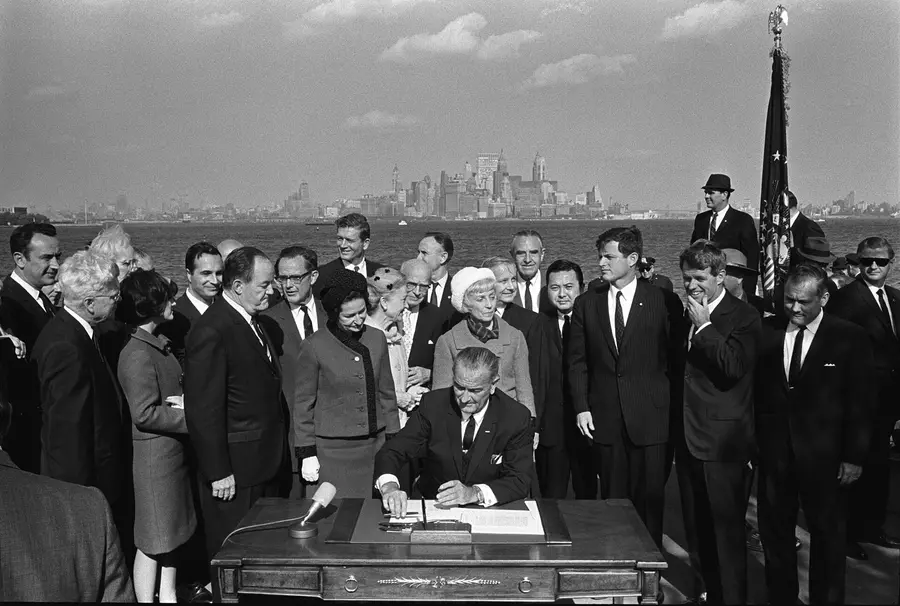
Ended the national origins quotas. It gave priority to family ties and needed skills, and set a limit for each hemisphere. Immigration from Asia, Africa, Latin America and the Caribbean grew in the years that followed.
- 1980
Refugee Act
Set one definition of a refugee, based on international law, and one process to admit refugees and to give asylum to people already in the United States.
- 1986
Immigration Reform and Control Act
Allowed some people who had lived in the country without permission since before 1982 to apply for legal status. It also made it illegal for employers to hire workers who are not allowed to work.
- 1990
Immigration Act of 1990
Raised the yearly number of immigrant visas and set three groups: family, employment and a lottery for countries that send few immigrants. It also created Temporary Protected Status.
- 1996
Illegal Immigration Reform and Immigrant Responsibility Act
Changed the rules about removal from the country, about time spent in the United States without permission, and about which crimes can lead to removal.
National Archives: Major US Laws Relating to Immigration and Naturalization, 1790 to 2005
- 2002
Homeland Security Act
Created the Department of Homeland Security. In 2003 the Immigration and Naturalization Service closed, and its work went to USCIS, ICE and CBP.
- 2012
Deferred Action for Childhood Arrivals (DACA)
A policy, not a law, announced by the Department of Homeland Security. It allows some people who came to the United States as children to ask for a delay of removal and for permission to work. Courts and agencies have reviewed it many times. Check USCIS for its current status.
Notable immigrants who arrived in this period
Mario Molina
From Mexico, came in 1968 · Chemistry
Came to the University of California, Berkeley for graduate study. He helped show how some chemicals harm the ozone layer, and won the Nobel Prize in Chemistry in 1995.
Gloria Estefan
From Cuba, came in 1960 · Music
Came to Miami as a child with her family. She is a singer and songwriter who has won many Grammy Awards.
Yo-Yo Ma
From France, to Chinese parents, came in 1962 · Music
Born in Paris and came to New York at age seven. He is a cellist who has won many Grammy Awards and has played at several presidential inaugurations.
Sergey Brin
From Soviet Union, now Russia, came in 1979 · Technology
Came at age six. He and Larry Page started Google while they were graduate students at Stanford.
Edwidge Danticat
From Haiti, came in 1981 · Writing
Came to Brooklyn at age 12. Her novels and stories about Haitian families have won major awards.
Dikembe Mutombo
From Democratic Republic of the Congo, came in 1987 · Sports and giving
Came to study at Georgetown University and went on to a long career in the NBA. He also funded a hospital in Kinshasa.
Viet Thanh Nguyen
From Vietnam, came in 1975 · Writing
Came as a refugee child. His novel The Sympathizer won the Pulitzer Prize for Fiction in 2016.
Isabel Allende
From Chile, came in 1988 · Writing
Moved to California and became a US citizen in 2003. She writes novels in Spanish that have been read by millions of people.
Hamdi Ulukaya
From Turkey, came in 1994 · Business
Came to study and later started the yogurt company Chobani in New York. He also began a group that helps companies hire refugees.
Maryam Mirzakhani
From Iran, came in 1999 · Mathematics
Came for graduate study at Harvard. In 2014 she became the first woman to win the Fields Medal, the top prize in mathematics.
“Immigrants… we get the job done!”
Sources and how we chose
The numbers and laws come from the sources below. The people were chosen to show many countries, fields, eras and women and men, and each has a record of achievements that is well documented. The list is a small part of the millions of immigrants who have shaped the country. Nobel Prize and US government pages are used when they exist. Other "Learn more" links lead to a general reference. We describe what laws and policies say and do. Checked in October 2026.
- National Archives: Major US Laws Relating to Immigration and Naturalization, 1790 to 2005
- Department of Homeland Security: Yearbook of Immigration Statistics
- Census Bureau: Historical Census Statistics on the Foreign-Born Population of the United States, 1850 to 1990
- USCIS: overview of immigration law and agency history
- National Park Service: Ellis Island history
If you see a mistake, use Report a problem in the footer. This page is general education and is not legal advice.
Citizenship test questions on these ideas
These civics test questions connect to the history above. Each one links to the answers USCIS accepts.
- What U.S. war ended slavery?
- What did the Emancipation Proclamation do?
- Abraham Lincoln is famous for many things. Name one.
- Who lived in America before the Europeans arrived?
- Name one American Indian tribe in the United States.
- How can people become United States citizens?
- What amendment says all persons born or naturalized in the United States are U.S. citizens?
- Where is the Statue of Liberty?
- Name two promises that new citizens make in the Oath of Allegiance.
- The colonists came to America for many reasons. Name one.
- What group of people was taken and sold as slaves?
Read the founding documents, see immigration resources and laws, or see all 128 questions.
Questions people ask
How many enslaved Africans were brought to North America?
From the 1500s to the 1800s about 12 million Africans were taken across the Atlantic. At least 388,000 arrived in North America, about 4 percent of the people who survived the crossing. About 15 percent of the people on the ships died. The first known arrival in English-occupied North America was in August 1619 at Point Comfort, Virginia, and slavery in the United States ended with the 13th Amendment in 1865.
Who lived in the United States before immigrants arrived?
Native peoples, also called American Indians or Native Americans, had lived here for many thousands of years. They spoke hundreds of languages, farmed, traded and built towns and governments. Cahokia, near today's St. Louis, may have had 10,000 to 20,000 people around the year 1100. Today 575 tribes are recognized by the federal government. The citizenship test asks who lived in America before the Europeans arrived.
How many immigrants have come to the United States?
The government began counting arrivals in 1820. About 10 million people arrived between 1820 and 1880, and about 23 million arrived between 1881 and 1920. Counts since then are in the Yearbook of Immigration Statistics from the Department of Homeland Security.
What were the main waves of immigration to the United States?
This page describes five periods: the colonies and early republic, the years from 1820 to 1880 with many Irish and German arrivals, the great wave from 1880 to 1924 from southern and eastern Europe, the quota years from 1924 to 1965, and the years since 1965, when most newcomers came from Latin America, Asia, the Caribbean and Africa.
When did the United States first limit immigration by numbers?
The Emergency Quota Act of 1921 set the first limits by number. The Immigration Act of 1924 made them stricter. The Immigration and Nationality Act amendments of 1965 ended the national origins quota system.
Where was Ellis Island and when was it open?
Ellis Island is in New York Harbor. The federal immigration station opened there on January 1, 1892, and it closed in 1954. More than 12 million people were processed there.
Is the citizenship test about immigration history?
Not directly. A few civics questions are about citizenship, the Oath of Allegiance, the Statue of Liberty and the history of the country. Knowing the history of immigration can help you understand why these questions are asked.
Where can I check the current immigration laws?
USCIS publishes the Immigration and Nationality Act and its Policy Manual at uscis.gov. Laws and rules change, so check USCIS or speak with a qualified immigration lawyer or an accredited representative about your own case.
From welcome to oath
Let's get you ready
Becoming an American is something to celebrate. Practice out loud, and we will help you feel ready for the interview.
Start practicing →